
Combining predictive simulations with innovative motion capture techniques to optimize speed skating technique.

Ragnhild Maarleveld
If you ask speed skaters and coaches which feedback parameters they would prefer, most will say: Power! We have been able to measure this on bicycles for decades, but it is more challenging on skates. In collaboration with the KNSB, this project aims to optimize skating technique through advanced video analysis and biomechanical models. Using video footage, we determine kinematics (joint angles, posture, position on the track) without requiring skaters to wear sensors. By utilizing a validated physics based model of the skater, the push-off forces are calculated, which determine the effectiveness of a stroke. From this, we compute power output. We are currently working on the proof-of-concept prototype.
✓
Parameter analysis for speed skating performance
van der Kruk, E. (2018), PhD thesis, Delft University of Technology, the Netherlands
✓
Accuracy of human motion capture systems for sport applications
van der Kruk, E, and Marco M. Reijne (2018)
✓
Power in Sports: a literature review on the application, assumptions, and terminology of mechanical power in sport research
van der Kruk, E., van der Helm, F. C. T., Veeger, H. E. J., & Schwab, A. L. (2018).
✓
Design and verification of a simple 3D dynamic model of speed skating which mimics observed forces and motions.
van der Kruk, E., Veeger, H. E. J., van der Helm, F. C. T., & Schwab, A. L. (2017).
✓
Wireless Instrumented Klapskates for Long-Track Speed Skating
van der Kruk, E., Den Braver, O., Schwab, A. L., van der Helm, F. C., & Veeger, H. E. J. (2016).
✓
Push-off forces in elite short-track speed skating.
van der Kruk, E., Reijne, M. M., de Laat, B., & Veeger, D. H. E. (2018).
✓
Getting the angles straight in speed skating: a validation study on an IMU filter design to measure the lean angle of the skate on the straights.
Van der Kruk, E., Schwab, A. L., Van Der Helm, F. C. T., & Veeger, H. E. J. (2016).
✓
Getting in shape: Reconstructing three-dimensional long-track speed skating kinematics by comparing several body pose reconstruction techniques.
van der Kruk, E., Schwab, A. L., van der Helm, F. C. T., & Veeger, H. E. J. (2018).
✓
Giving the force direction: analysis of speed skater push-off forces with respect to an inertial coordinate system
Van der Kruk, E., van der Helm, F. C., Schwab, A. L., & Veeger, H. E. J. (2016, November).
✓
Two body dynamic model for speed skating driven by the skaters leg extension
van der Kruk, E., Veeger, H. E. J., van der Helm, F. C. T., & Schwab, A. L. (2015).
Finished Graduation projects
Or, as she put it: “When Kjeld Nuis was chasing his ‘quest for speed’ world record, could he have gone even faster with a different technique? (Maybe!) And would the optimal technique be different for Joy Beune (Yep!)”
Her research involved over 150 simulations using our Speed Skater Model (https://lnkd.in/e5Qwy-Fe), adjusting variables like environmental conditions (air & ice friction), body build (mass & height), and strength. She mapped out the optimal skating strategy in terms of stroke frequency, push-off forces, timing, and skate trajectory (steering angle & force profile). The results? An interesting deep dive into fine-tuning (theoretical) speed skating technique for maximum speed and efficiency.
We look forward to diving into these findings further and, hopefully, discussing them with some experts on the ice!
MSc students working on this project
Graduated MSc students
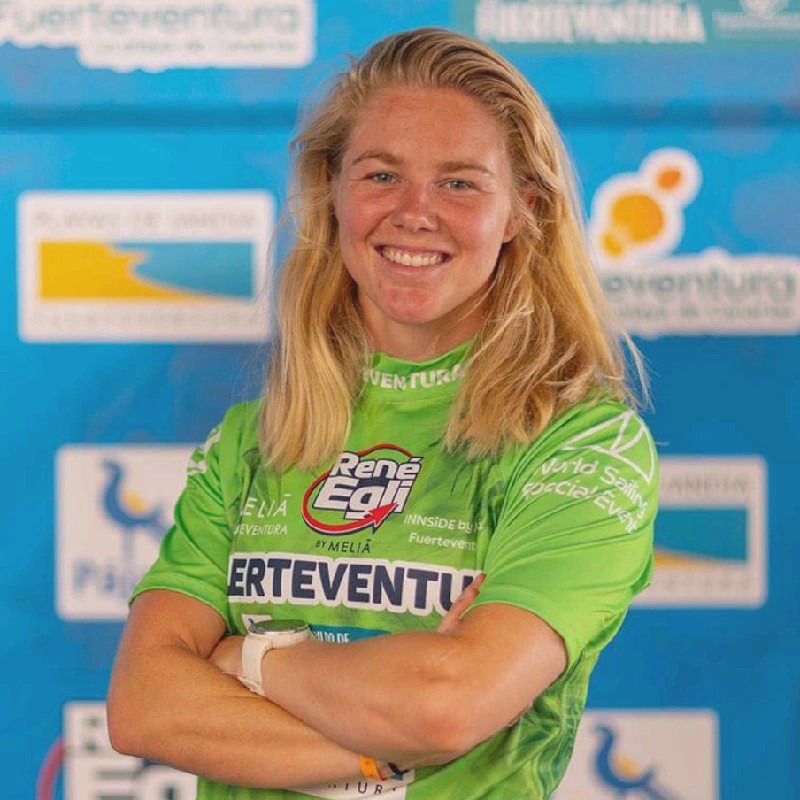

Ragnhild Maarleveld (2024)
Thesis: Towards Video-Based Power Estimation in Speed Skating


Sophia van der Laan
MSc student Industrial Design TU Delft
 BODIES